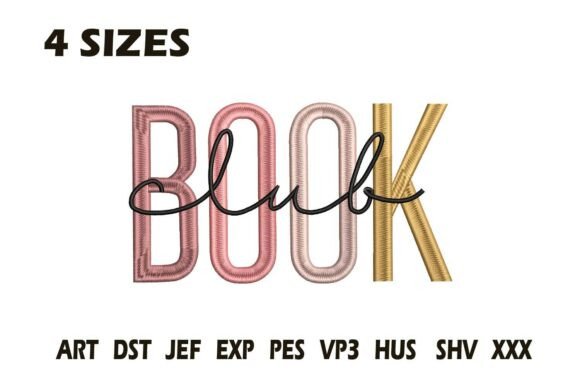
Book Club Embroidery Design
First Impressions and Design Personality
When I first opened the Book Club Embroidery Design file, I immediately felt its playful, whimsical energy. The layout feels like a tiny celebration of reading, with a charming arrangement that reads as both nostalgic and fresh. As someone who designs for boutique sweatshirt collections, I’m always hunting for machine embroidery designs that bring a distinct personality to a garment—and this one tells a story. It’s not overly complicated, but the details suggest a thoughtful hand, almost like a hand-drawn illustration translated into stitches. The mood lands somewhere between cute and cozy, with a hint of intellectual charm. You can picture it on a coffee shop hoodie, a bookstagram tote, or a limited-edition crewneck for a small bookshop. For a School category piece, it avoids the typical classroom clipart look and instead delivers something that feels curated.
What I appreciate most about the Book Club Embroidery Design is its versatility in tone. It could easily lean feminine and soft with pastel thread choices, or feel more rustic and bold on a textured oatmeal sweatshirt. The design doesn’t scream “kid’s craft” — it holds its own as a boutique brand asset. The linework and filled areas seem balanced, so the finished embroidery will have nice dimension without becoming too dense or heavy. That’s a key factor when you’re planning a drop of premium sweatshirts. You want the embroidery to feel like part of the garment, not a stiff patch glued on top.
Evaluating the Design for Sweatshirt Apparel
When I’m prepping a new sweatshirt collection for my online shop, every design has to pass the “will it sell on a hoodie?” test. Book Club Embroidery Design passes with flying colors. The scale and composition look ideal for chest placement on a classic crewneck or oversized hoodie. Center chest embroidery is the most requested placement from my customers, and this design’s proportions seem to fit that sweet spot. It’s not too wide, not too tall, and the internal spacing keeps the design readable even on a soft, brushed fleece. I can already imagine it in a mockup preview—stitched in a warm navy thread on a cream sweatshirt, or in dusty rose against heather gray.
Placement Options and Visual Impact
Beyond the classic chest logo position, Book Club Embroidery Design opens up several creative placements. For a fashion-forward look, I’d test it as a smaller sleeve accent on a slouchy cardigan or zip-up hoodie. The playful nature of the design makes it perfect for unexpected spots—like a tiny pocket embroidery or a scattered back design near the yoke. On oversized hoodies, a slightly larger scale version could work beautifully as a back centerpiece, especially if you’re branding a cozy reading club collection. The key is keeping the design proportional to the hoop size and garment area. I’d recommend digitizing the file at a few different sizes to test how the stitch density holds up when scaled.
Fabric and Color Considerations
Fabric texture plays a huge role in how any embroidery file performs. With Book Club Embroidery Design, I’m paying close attention to how the stitches will sit on loopback French terry versus a dense fleece. The design seems to have enough open space and defined outlines to avoid getting lost in plush fabric. On dark sweatshirt bases, contrast will be crucial—I’d probably use a matte polyester thread in off-white or a muted gold to make the design pop. On pastel fabrics, a slightly darker thread color like moss green or deep teal would give it a vintage library feel. Neutral sweatshirts in oatmeal, charcoal, or soft ivory will be my go-to backdrops because they let the whimsical details breathe without competing. I always remind my small shop clients that the same embroidery file can look like a completely different finished product depending on the thread color and fabric base, so it’s worth testing a few combinations before committing to a full production run.
Technical Embroidery Considerations
As much as I love the aesthetic, I can’t ignore the technical side. A great machine embroidery design needs to run smoothly on a single-head or multi-needle machine, and Book Club Embroidery Design appears clean enough to avoid excessive trims and jump stitches. However, I always recommend checking the actual stitch count and file format before production. The design didn’t come with a detailed spec sheet, so I’ll need to verify the digitized stitch density, underlay settings, and whether the file is optimized for my machine type. For a commercial embroidery project, these details are non-negotiable.
Stitch Density and Small-Size Readability
One concern I always have with playful, detailed designs is how they scale down. If I want to stitch Book Club Embroidery Design on a baby onesie or a small cosmetic pouch, the fine details might close up or become lumpy. I’d run a sew-out at the smallest intended size to check if the lettering (if any) and tiny book details remain legible. For sweatshirt uses, I’ll likely keep the design at 3.5 to 4.5 inches wide, which gives enough room for the stitch density to breathe. High density on thick fabric can lead to puckering, and nobody wants a wavy design on a $60 hoodie. If the file is too dense, I’d ask my digitizer to adjust the pull compensation and reduce the stitch count slightly for a softer hand feel.
Stabilizer and Hooping for Knit Fabrics
No matter how beautiful the design, improper hooping and stabilizer choice will ruin the result. Sweatshirt fleece is stretchy and forgiving but still needs a firm foundation. For Book Club Embroidery Design, I’ll use a medium-weight cutaway stabilizer hooped with the garment, plus a water-soluble topping if the fabric has a high nap. The topping prevents the stitches from sinking into the fabric texture, keeping the design crisp. I’ll also float a second layer of adhesive stabilizer underneath for extra security on heavy hoodies. The hoop size needs to accommodate the entire design without forcing the fabric to stretch, so I’ll double-check the file’s dimensions and choose a hoop that gives at least 1 inch of clearance around all edges. This attention to detail is what separates a handmade product that looks professionally crafted from one that looks like a hobby project.
Commercial Value and Branding Potential
From a boutique brand perspective, Book Club Embroidery Design carries real emotional appeal. It taps into the cozy, introspective lifestyle that so many readers love. I can see this design anchoring a seasonal collection called “Cozy Chapters” or “Library Sessions,” with matching enamel pins and printable mockup assets for social media. The design feels niche enough to attract a loyal following but universal enough to sell beyond a single demographic. For an Etsy seller, this kind of embroidery file can become a bestseller because it’s easy to photograph on a lifestyle flat lay with a mug, a candle, and a worn paperback. The finished product practically markets itself.
Using a design like this also builds buyer trust. When customers see a consistent, thoughtful aesthetic across your shop, they perceive higher value. The Book Club Embroidery Design doesn’t just decorate a sweatshirt—it tells a story that the wearer connects with. That emotional connection turns a casual browser into a repeat customer. For small shops, visual recognition is everything, and a recognizable design style (like this whimsical bookish theme) becomes a signature. I’d absolutely use this as part of my core design assets, rotating thread colors and garment bases to keep the collection fresh without having to source new embroidery files every season.
Final Thoughts Before Production
Before I send Book Club Embroidery Design into full production, there are a few steps I never skip. I’ll test the embroidery file on a sample sweatshirt in the exact fabric and color I plan to sell. I’ll wash that sample at least three times to check for thread fraying, fading, or puckering. I’ll also check the design’s integrity after drying—if there’s even a hint of distortion, I’ll adjust the stabilizer method or switch to a softer backing. I remind other boutique owners to always verify the file format, hoop size, and commercial license terms directly with the design source. The product description mentions “stitching on t-shirts, towels, home decor,” so it’s safe to assume the design is intended for multiple uses, but I’d still confirm the allowed usage for physical product sales. Digital embroidery files often come with specific terms, and you don’t want to risk your shop’s reputation.
Overall, Book Club Embroidery Design earns a strong recommendation from me. It has the charm, the technical potential, and the brand-building power that a small boutique craves. Whether you’re a seasoned commercial embroiderer or a solo Etsy seller, this design can elevate your sweatshirt game and turn a simple garment into a conversation starter. I’m excited to see it stitched out and sitting pretty in my next collection drop.