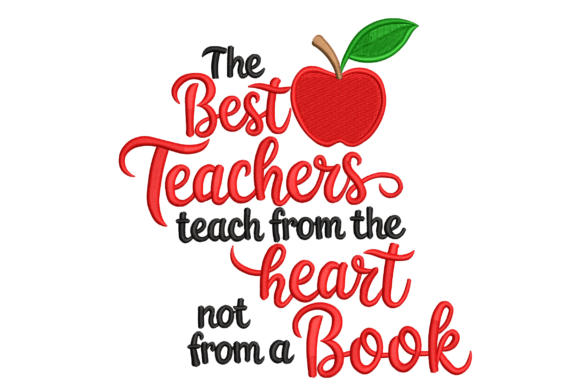
The Best Teachers Embroidery Design: A Designer’s Review
When I first saw The Best Teachers embroidery design on Creative Fabrica, I immediately thought of the quick teacher appreciation gifts I’m asked to make every spring. The product title itself is a clear, heartfelt message that needs no extra explanation. In my embroidery studio, simple phrase-based designs like this often become quiet bestsellers at craft fairs and in Etsy shops, but only if they stitch out cleanly and look polished on real handmade products. So, I spent some time evaluating this design from the perspective of a working embroidery designer, considering how it might perform on items I actually produce: tote bags, kitchen towels, sweatshirts, and even small patches.
Right away, the product description sets a nice tone: “Elevate your embroidery projects with this artistic design. Stitch it on apparel, kitchen towels, or home décor for a polished and professional finish.” That’s a broad canvas, and it tells me the designer intended this to be versatile. The phrase “artistic design” suggests there’s more than just plain text — perhaps decorative flourishes, a subtle frame, or a playful layout. The description also mentions that the machine embroidery design comes with multip... and while the listing cuts off, I assume it might refer to multi-size or multi-format files. I’ll circle back to that later, because details like that matter a lot in real production.
First Impressions and Artistic Mood
Without seeing the actual stitch preview, I’m imagining the visual mood of The Best Teachers based on the title and the School category. It likely carries a warm, appreciative feel — maybe a script font combined with a clean sans-serif, or a chalkboard-inspired typography that feels right at home in a classroom setting. The best teacher-themed designs lean into a sense of gratitude and professionalism without being overly juvenile. This balance is crucial: if the design is too cartoonish, it limits the audience to children’s gifts; if it’s too formal, it loses the handmade charm.
I can picture the lettering flowing nicely, with a mix of satin stitch elements for the main words and some delicate running stitch accents for smaller details. The visual weight of the phrase “The Best Teachers” is important — it should feel substantial enough to anchor a tote bag design or a pillow cover, but not so dense that it becomes a nightmare to stitch on stretchy apparel. As an embroidery designer, I’m always checking that the design’s personality aligns with the products I’d sell. This one feels like it could easily become a go-to for seasonal handmade gifts and personalized items.
Stitch Structure and Detail Considerations
When I review any machine embroidery design for real project use, I look at the implied stitch types. The phrase “The Best Teachers” is likely rendered with a combination of satin stitch for the main lettering and possibly fill stitch for any decorative background shapes. The thickness of the letters matters a lot. If the text is too small and dense, tiny lettering can become illegible or cause thread breaks on a home machine. I don’t know the exact stitch count or dimensions from the Creative Fabrica listing, so I’d advise checking the product page before downloading. A good rule of thumb: if the design includes small hoop sizes, always test the smallest version first on a scrap of cotton with the stabilizer you plan to use.
In my experience, teacher-themed designs often include additional elements like an apple, a pencil, or a small floral accent. If The Best Teachers incorporates any of those, watch for layered details. Layered satin stitches can add beautiful texture, but they also increase stitch density. On a kitchen towel or a lightweight tote, high density might cause puckering if the fabric isn’t hooped tightly or the stabilizer isn’t adequate. I always run a test on a similar fabric to see how the design pulls. The embroidery file itself might already be optimized, but I never assume — I test.
Ideal Projects for This Design
I can easily see The Best Teachers stitched across a wide range of handmade products. Here’s where my mind goes as a seller:
- Custom apparel: A simple sweatshirt with this design on the chest or upper back feels instantly giftable. It’s a classic teacher appreciation item that customers love to order.
- Tote bags: Probably my favorite canvas. A medium-sized tote with the design centered near the top gives a polished, boutique feel. These sell well at craft fairs.
- Kitchen towels: A crisp white flour sack towel with this phrase in a bright thread color turns a practical item into a heartfelt present. I’d pair it with a wooden spoon for a coordinated gift set.
- Pillow covers: A soft linen or cotton pillow cover with the design in a corner or centered creates a cozy teacher’s lounge vibe. Great for nursery decor or a classroom reading nook.
- Embroidered patches: If the design is available in a size small enough to fit on a cap or a patch, this could become a popular item. Teachers love putting patches on their jackets or bags.
- Aprons: A sturdy apron with “The Best Teachers” embroidered across the bib is a fun gift for a teacher who loves to cook or does art projects.
Notice I’m not suggesting ultrasmall items like key fobs or tiny zipper bags unless the design scales down perfectly. The text legibility and stitch density must hold up at small sizes. I’d check the smallest hoop size listed on the Creative Fabrica product page and compare it with my machine’s capabilities.
Practical Embroidery Notes for Real Stitching
When I prepare to stitch a design like this for a customer order, I follow a routine that saves me from costly mistakes. Here’s how I’d approach The Best Teachers:
- Test on scrap fabric first: I keep a stack of cotton muslin and similar fabric scraps for every new design. I watch how the thread colors interact, how the stitches lay, and whether any small details vanish.
- Check thread color contrast: The design’s mood changes dramatically depending on thread choice. A bright white thread on a dark sweatshirt pops, but a pastel thread on a light towel might look washed out. I always mock up a quick digital preview or compare a few thread spools against the fabric.
- Review the stitch density: If the design feels heavy or stiff, I might adjust my machine tension slightly, but I never edit the embroidery file itself unless I have the right software and permission. The product description doesn’t mention stitch density, so I’m relying on the creator’s optimization.
- Confirm hoop size: I note the required hoop size from the product details. I’ve been burned by designs that claim to fit a 4x4 hoop but have elements too close to the edge, causing registration issues.
- Use proper stabilizer: For a kitchen towel, I’d use a medium-weight cutaway stabilizer with a water-soluble topper to prevent the stitches from sinking into the fabric texture. For a sweatshirt, a no-show mesh cutaway keeps the stretch in check.
- Inspect small details after stitching: I look closely at any tiny lettering or decorative accents. If the details are muddy, I know the design isn’t suitable for that size or fabric.
These steps aren’t optional when you’re selling finished products. A single poorly stitched item can erode buyer trust, so I treat every new Creative Fabrica embroidery design as a prototype until proven otherwise.
Stitching on Different Fabric Personalities
I’ve stitched enough teacher appreciation designs to know that fabric choice is half the battle. The Best Teachers will behave differently on each surface:
Stretchy fabrics: A sweatshirt or a baby blanket knit can distort the lettering if the stabilizer isn’t right. I prefer a fusible mesh stabilizer directly on the fabric back, then hoop the fabric and stabilizer together. The design’s stitch pattern should avoid long, unanchored satin stitches that can shift with the fabric’s stretch.
Textured fabrics: A thick kitchen towel or a waffle-weave cloth can hide details. I’d use a water-soluble topper on top to create a smooth stitching surface. The design’s satin stitches should be wide enough to cover the texture without exposing the fabric underneath.
Dark fabrics: If the design relies on dark thread colors for contrast, I’d check the thread palette. A design that looks vibrant on a white background might become muddy on navy or black. Sometimes I reverse the thread colors manually, but only if the design file allows easy color changes.
Curved cap surfaces: If I wanted to stitch this on a cap, I’d need a design that fits a cap hoop and has a center placement that doesn’t warp when curved. The product listing doesn’t mention cap compatibility, so I’d test a small version on a scrap of stiff fabric first, then decide if it’s worth selling as a cap design.
How This Design Affects Product Value
When I add a phrase like The Best Teachers to a handmade item, I’m not just stitching words — I’m creating an emotional connection. The right design can elevate a simple tote bag into a cherished gift, and that directly impacts the price I can charge. A well-stitched, clean-looking embroidery design signals quality and care. It tells the buyer, “This was made by someone who knows what they’re doing.”
I’ve noticed that teacher-themed products with a polished finish tend to get more engagement in my product photography. The design’s visual appeal influences how the item looks in a flat lay or a styled mockup. If The Best Teachers has a crisp, well-digitized structure, it will photograph beautifully on a wooden table next to an apple and a stack of books. That kind of imagery sells the product before the buyer even reads the description.
From a brand consistency standpoint, this design could become a staple in my collection. I might offer it on a range of products in my Etsy shop, all unified by the same heartfelt message. It’s a design that fits into the “giftable” category easily, and that’s a strong market segment for creative entrepreneurs.
Things to Double-Check on the Creative Fabrica Product Page
Before I hit “purchase” or download, I always scroll through the product details on Creative Fabrica. For The Best Teachers, here’s what I’d verify:
- File formats included: Does the download include the formats my machine uses (PES, DST, EXP, etc.)? The description says “multip” which might mean multi-format, but I’d confirm.
- Hoop sizes and design dimensions: I need to know the exact stitch area for each size. If the design is only available in one large size, I might not be able to stitch it on smaller items unless I resize it myself (which isn’t always advisable without software).
- License terms: Creative Fabrica’s license usually allows commercial use of finished products, but I always check the specific product license to see if there are any restrictions on selling physical items or using the design on digital mockups.
- Stitch count and color chart: This helps me estimate thread cost and production time. A high stitch count might mean a denser, more durable design, but it also takes longer to stitch.
- Photo previews: I look at the listing images carefully to see if there’s a close-up of the actual stitches, not just a digital mockup. A real stitch-out photo gives me confidence.
Without these details, I’m taking a calculated risk. The product description’s promise of a “polished and professional finish” is encouraging, but only a real test will confirm it. I always keep a notebook of my test results, noting which designs worked on which fabrics and hoops.
Creative Business Scenarios
I can think of several ways to use The Best Teachers in a commercial embroidery setting:
Etsy shop listings: I’d create a simple listing for a personalized tote bag or sweatshirt with this design, offering a choice of thread colors and perhaps adding a teacher’s name in a coordinating font. The phrase is broad enough to appeal to multiple grade levels, so it’s a safe inventory item.
Craft fair products: I’d stitch a batch of kitchen towels and pillow covers ahead of Teacher Appreciation Week. The design’s artistic feel would make it stand out among other typography-only pieces. I’d price them as a mid-range handmade gift, around $18–$25 for a towel or $30–$40 for a sweatshirt, depending on the market.
Boutique merchandise: A local children’s boutique might carry a line of teacher-themed items. I’d offer a wholesale rate on sets of aprons or tote bags featuring this design. The polished finish is key here — boutiques demand consistency.
Printable mockups: If I sell digital design assets, I might use The Best Teachers in a mockup bundle showing how the design looks on various products. This helps other sellers visualize the end result and can drive more sales of the physical items.
In all these scenarios, the design’s actual stitch quality is the foundation. I’ve learned not to trust a pretty digital preview alone. I’ve been burned by designs that looked great on screen but had wonky underlay or excessive trims in real life. That’s why I always test.
Final Thoughts from an Embroidery Designer’s Perspective
I haven’t yet stitched The Best Teachers on a physical item, but based on the product description and its category, it feels like a solid addition to a teacher-themed collection. The phrase carries universal appeal, the promised artistic touch suggests care in the digitizing, and the broad usage suggestions cover the products I make most often. As a machine embroidery design, it has the potential to become a reliable seller, especially for seasonal handmade gifts.
My advice to fellow embroidery designers and small business owners is straightforward: treat this design as a promising tool, but don’t skip the test stitch. The success of a finished product hinges on the tiny details — thread tension, stabilizer choice, fabric compatibility, and color contrast. If you’re considering The Best Teachers for commercial embroidery products, take the time to verify the file details on the Creative Fabrica product page. The description fragment “comes with multip” suggests there might be multiple sizes or formats, which is a huge plus for flexibility. But confirm before you commit to a large production run.
I can see myself stitching this design onto a soft cotton tote bag, photographing it in natural light, and listing it as a teacher appreciation gift. The emotional resonance of the phrase “The Best Teachers” is undeniable, and when it’s stitched with care, it tells a story that customers want to give. That’s the kind of embroidery design I’m always looking for — one that carries its own weight in meaning and stitches out as beautifully as it looks on screen.