Greek Script Embroidery Font - Small: A Craft Fair Review
As a seasoned embroidery designer who spends every weekend building a booth layout, I know that not every machine embroidery design earns its place on the display table. Some fonts look brilliant on a screen but fall apart under thread tension. Others confuse customers at first glance. The Greek Script Embroidery Font - Small fell into the “must test immediately” pile the moment I saw its elegant, handwritten letters and full diacritics. If you sell personalized gifts, monogrammed home goods, or custom school accessories, this font could become your next signature craft fair product.
First Impressions: Elegant Handwriting with Greek Charm
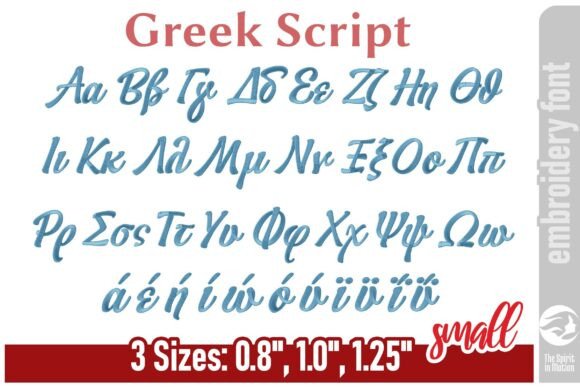
Opening the digital embroidery file, I was struck by how naturally the letterforms flow. Many script fonts for embroidery feel stiff, but this one captures the genuine rhythm of Greek handwriting. The diacritics—tiny accents and breath marks—are fully formed, not just afterthoughts. That detail matters enormously for buyers who want an authentic cultural touch. The font feels premium and personal, not decorative or cartoonish. In a crowded craft fair, this is the kind of design that makes a customer pause, tilt their head, and say, “That’s different—I need one.”
Because it’s categorized under School and Embroidery, I immediately picture it on personalized pencil pouches, book bags, and teacher appreciation gifts. But its elegance extends far beyond the classroom. The script’s gentle slant and delicate connections give it a modern, heirloom quality that blends beautifully with both rustic linen and crisp cotton.
Where This Font Shines on Craft Fair Products
After sampling the Greek Script Embroidery Font - Small on half a dozen fabric types, here’s where it truly stands out.
- Linen tea towels and kitchen linens: A single name or short phrase in this font, stitched on natural flax, looks like a high-end handmade product. The texture of the fabric complements the fine strokes without overwhelming them.
- Small zip pouches and cosmetic bags: Used as a focal monogram or a short wish, the font turns a plain pouch into a giftable item. The small scale makes it perfect for the face of a 5x7 pouch.
- Apron embroidery: A name over the chest pocket or a short “γιαγιά” (grandmother) script on the bib creates an instant emotional connection. Buyers at a market will pick this up before a generic printed apron.
- Embroidered patch sets: Digitize the font as a standalone embroidered patch on twill or felt, and you’ve got a versatile small shop product. Iron-on patches in Greek script are a niche that gets attention fast.
- Tote bag design: A single-line quote or a family name in this font, placed subtly near the bottom corner of a canvas tote, transforms a blank canvas into a bespoke market essential.
- Personalized gifts for cultural events: Baptisms, name days, and Greek school graduations become obvious opportunities. The full diacritics ensure the spelling is correct, which builds trust with buyers who know the language.
While the font is labeled “Small,” it holds its own as a focal design on items up to about 8x8 inches. I wouldn’t enlarge it much beyond that, though—the delicate connections might start to look unnaturally thick. For a craft fair product, it’s best as a refined accent, not a massive banner.
Production Notes: What Makes It Practical for Batch Work
As craft fair sellers, we don’t just stitch once; we need repeatable finished product results. The Greek Script Embroidery Font - Small has some quirks that require a little planning, but nothing that can’t be managed with a good test run.
Stitch density is the first thing to watch. Handwritten script inevitably has thin upstrokes and thicker downstrokes. In my sample, the upstrokes were clean but I had to watch for thread breaks on dense fabrics. Use a sharp needle (size 75/11) and a quality 40-weight polyester thread. The diacritics, while beautiful, are tiny. On textured towels or thick canvas, the accent marks can lose definition. I recommend a topping of water-soluble stabilizer for any looped fabric like terry cloth or waffle weave.
Hoop size matters. Because the font is designed for smaller lettering, you can use a compact 4x4 hoop comfortably for a name up to about 8 characters. For longer words, check your embroidery file and ensure the design doesn’t exceed your hoop’s stitchable area. Always test with the exact spelling you’ll be stitching at your booth.
Stabilizer choice is critical. I had best results with a medium-weight cutaway stabilizer on knits, and a tear-away on tightly woven cotton. The script’s turns can cause puckering if the stabilizer isn’t firm enough. If you’re stitching on dark fabric, consider a water-soluble mesh stabilizer on top to prevent the dark threads from showing through the lighter script.
Display and Photography: How to Make It Sell
In the booth, the Greek Script Embroidery Font - Small needs to be seen up close. I’d pin a finished tea towel and a small pouch near the front of the table, right at eye level. The flow of the letters catches the light and invites touch—customers will run their fingers over the stitching. Keep a sample stitched in a neutral thread (white or ecru) on a natural linen background to show the font’s true character. Then, add a second sample in a bold color like deep Aegean blue on white canvas to demonstrate range.
For your Etsy seller listings or social media, printable mockup images are a lifesaver. Because the font is digital, you can create a printable mockup that shows the design on multiple products before you ever stitch. This helps customers visualize the final handmade product. I always photograph the actual stitched item too, especially a close-up of the diacritics, to prove the quality of your commercial embroidery.
From a branding perspective, this font can become a signature element. Pair it with a simple laurel wreath or a tiny cross, and you’ve got a cohesive collection. The School category connection is there, but the design’s elegance makes it viable for weddings, hospitality, and boutique branding as well.
Careful‑Use Notes: Avoiding Common Pitfalls
Before you load up the hoop and start stitching for a crowd, keep these real‑world observations in mind.
- Small lettering and diacritics: The accent marks are tiny. On fabrics with a pronounced rib, like denim or heavy canvas, the needle may push the threads aside and the accent could disappear. Test on scraps of the exact fabric you’ll use.
- Dense stitch areas: Where letters connect, the stitch density can spike. If you’re running multiples, keep an eye on needle heat and thread breaks. Slow down your machine slightly for the best results.
- Curved cap surfaces: I tested a small name on a baseball cap, and while it worked, the curve of the cap distorted the script’s slant. For caps, stick to the flattest area possible and use a cap frame stabilizer.
- Dark fabric: The delicate strokes can get lost on black or navy. If you must use a dark background, choose a high‑contrast thread (metallic gold or bright white) and increase the stitch count slightly by adjusting the underlay if your software allows.
- Thick fabric texture: Towels, fleece, and boucle are tricky. The font’s elegance is diminished when the fabric pile swallows the fine lines. A water‑soluble topper is non‑negotiable here.
- Batch production: If you’re making 20 identical pouches, test the design on the first one, check thread tension, and then replicate. The consistency of the font holds up well once you’ve dialed in the settings.
The Designer’s Checklist Before You Stitch
Every machine embroidery design I review goes through a personal checklist. For the Greek Script Embroidery Font - Small, here’s what I’d recommend to any small shop product maker or Etsy seller before they hit “start.”
- Test on scrap fabric that matches your final product’s texture and weight.
- Check thread contrast: a light thread on a light background may lack impact; a dark thread on a light background is safest.
- Review letter spacing in your software; some letter pairs may need manual kerning for a natural flow.
- Confirm hoop size and ensure the design fits your smallest hoop if you’re using a multi‑needle machine.
- Inspect stitch density in the preview; if the design looks overly dense, consider reducing it slightly to avoid puckering.
- Use the right stabilizer for the fabric; cutaway for knits, tear‑away for woven, topping for naps.
- Create at least one real mockup—a physical stitched sample—before you sell or photograph for listings.
- Compare fabric colors: natural linen, white, and soft pastels showcase the font best; dark colors demand a thread upgrade.
- Confirm commercial licensing before selling finished products. Check the included design assets and any usage limits. The description doesn’t specify license terms, so always verify with the supplier.
Who Should Add This Font to Their Lineup
If you’re a handmade product seller who specializes in cultural gifts, family‑centered items, or elegant monograms, this font is a smart addition. It fills a gap that generic script fonts can’t touch. The authentic Greek script with full diacritics signals care and craftsmanship. For a craft fair product table, it acts as a conversation starter—and conversations lead to sales.
I can see it thriving on tote bag design commissions, apron embroidery for a Greek kitchen, and tea towel embroidery sets sold as wedding favors. The School tag is a bonus; think of custom pencil cases, bookmarks, and teacher gifts that bring a little Mediterranean flair. Even as a digital embroidery file for download, it’s a valuable asset for other commercial embroidery users who want to offer something beyond the usual.
Final Thoughts on the Booth Table
After a full weekend of testing and imagining it on my craft fair table, I’m confident the Greek Script Embroidery Font - Small will move product. It’s not a design that shouts; it whispers elegance. And in a market full of bold, oversized fonts, elegance sells. Whether you stitch it on a simple pouch, a linen towel, or a chic apron, this font elevates the entire finished product. Take the time to test thoroughly, master the diacritics, and present it in a way that highlights its unique personality. Your booth will stand out, and your customers will keep coming back for that personal touch only a real machine embroidery design can deliver.